
ProLesson 6.4Intermediate4 min readUpdated 31 October 2026
Service-to-Service Security, Timeouts & Retries
Fortify inter-service communication with mutual TLS, OAuth2 Client Credentials token relay, connection and read timeouts, and intelligent retry strategies.
A common misconception among beginner microservices developers is assuming that the internal corporate VPC is inherently secure and network calls will always succeed in reasonable timeframes.
In production:
- Internal networks can be compromised: An attacker breaching one pod can sniff unencrypted traffic or forge requests to adjacent services unless strict mutual authentication is enforced.
- Network partitions and slow downstream services are inevitable: An unconfigured HTTP client with indefinite timeouts will exhaust thread pools and collapse the entire platform.
01Service-to-Service Authentication: OAuth2 Client Credentials
When Service A calls Service B as an autonomous background process (not on behalf of an active logged-in user), it authenticates using the OAuth2 Client Credentials Grant.
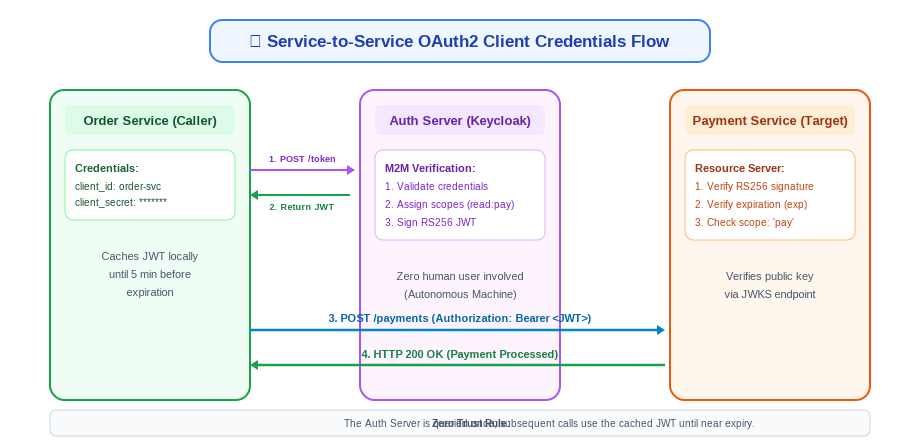
Spring Security 6 OAuth2 Client Manager Configuration
java
package com.veltoryx.order.security;

import org.springframework.context.annotation.Bean;
import org.springframework.context.annotation.Configuration;
import org.springframework.security.oauth2.client.*;
import org.springframework.security.oauth2.client.registration.ClientRegistrationRepository;

@Configuration
public class OAuth2ClientConfig {

    @Bean
    public OAuth2AuthorizedClientManager authorizedClientManager(
            ClientRegistrationRepository clientRegistrationRepository,
            OAuth2AuthorizedClientService authorizedClientService) {

        OAuth2AuthorizedClientProvider authorizedClientProvider =
            OAuth2AuthorizedClientProviderBuilder.builder()
                .clientCredentials()
                .build();

        AuthorizedClientServiceOAuth2AuthorizedClientManager manager =
            new AuthorizedClientServiceOAuth2AuthorizedClientManager(
                clientRegistrationRepository, authorizedClientService);

        manager.setAuthorizedClientProvider(authorizedClientProvider);
        return manager;
    }
}
Loading the rest of the lesson…