
Clean Code in an LLD Round
Learn the small coding habits that make an LLD answer easy to read: clear names, named constants, small methods, honest failures, immutability and basic thread safety, plus what to skip when time is short.
In an LLD round, the interviewer reads your code the way a teammate reads a pull request. They are not running it. They are asking themselves: "Would I be happy to work in this code every day?" A design with good classes can still lose marks if the code is full of unclear names, magic numbers and one huge method. The good news is that a handful of habits fix most of this, and every one of them costs only a few seconds to apply.
01Names that explain themselves
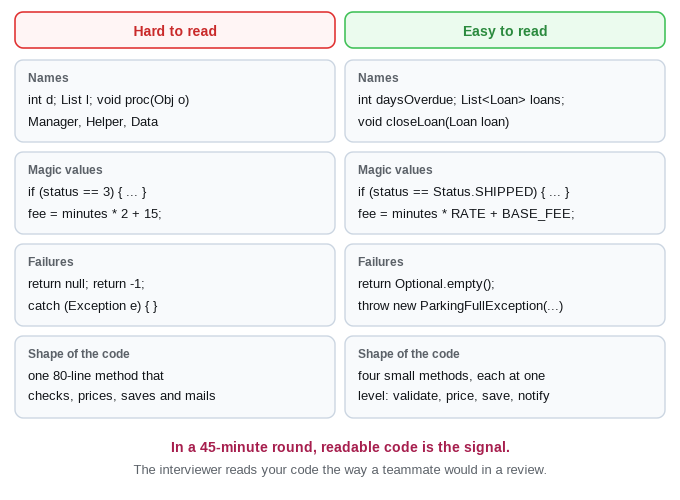
A good name tells the reader what a thing is or what a method does, so they do not have to read the body. Look at the left and right side of the figure above.
| Instead of | Write | Why |
|---|---|---|
int d; | int daysOverdue; | The reader knows the unit and the meaning |
List l; | List<Loan> loans; | The type and the plural show what it holds |
void proc(Obj o) | void closeLoan(Loan loan) | A verb plus the thing it acts on |
Manager, Helper, Data | A name for what it really does | Vague names usually hide a class with too many jobs |
boolean flag | boolean isOccupied | A yes or no name reads like a question |
Use nouns for classes, verbs for methods and questions for booleans. If you struggle to name a class, it may have more than one job, which is a hint from Module 3 that it needs splitting.
Loading the rest of the lesson…