
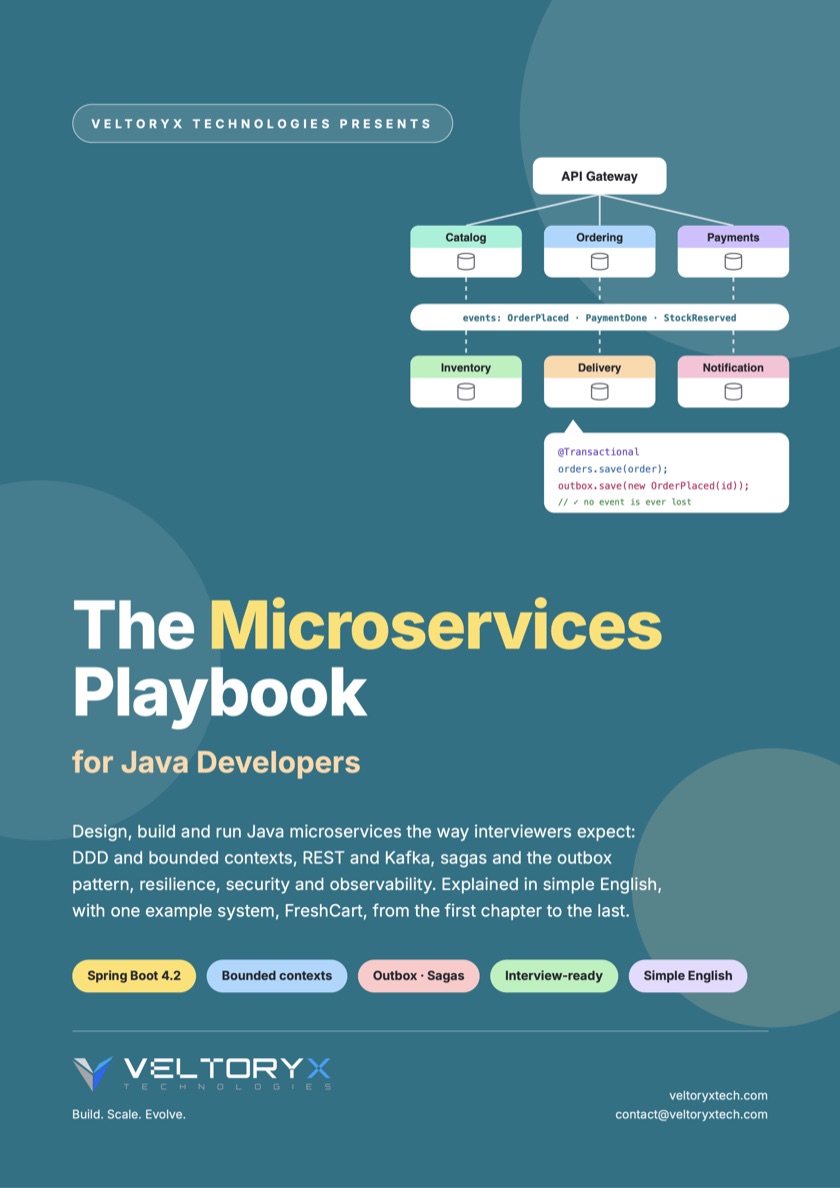
The Microservices Playbook for Java Developers
Design, build and run Java microservices the way interviewers expect: DDD and bounded contexts, REST and Kafka, sagas and the outbox pattern, resilience, security and observability. Simple English, a picture for the big ideas, and one example system, FreshCart (a grocery-delivery app with seven services), from the first chapter to the last.
- 376 pages
- 41 chapters
- Java 21 · Spring Boot 4.2
- 3 mock design rounds
- 120 interview Q&A
- Edition 1
₹599
One-time payment · yours to keep · UPI or card
Personal use only. Refund within 7 days if you haven't downloaded it. Price includes GST. Not included in Veltoryx Pro. Refund policy
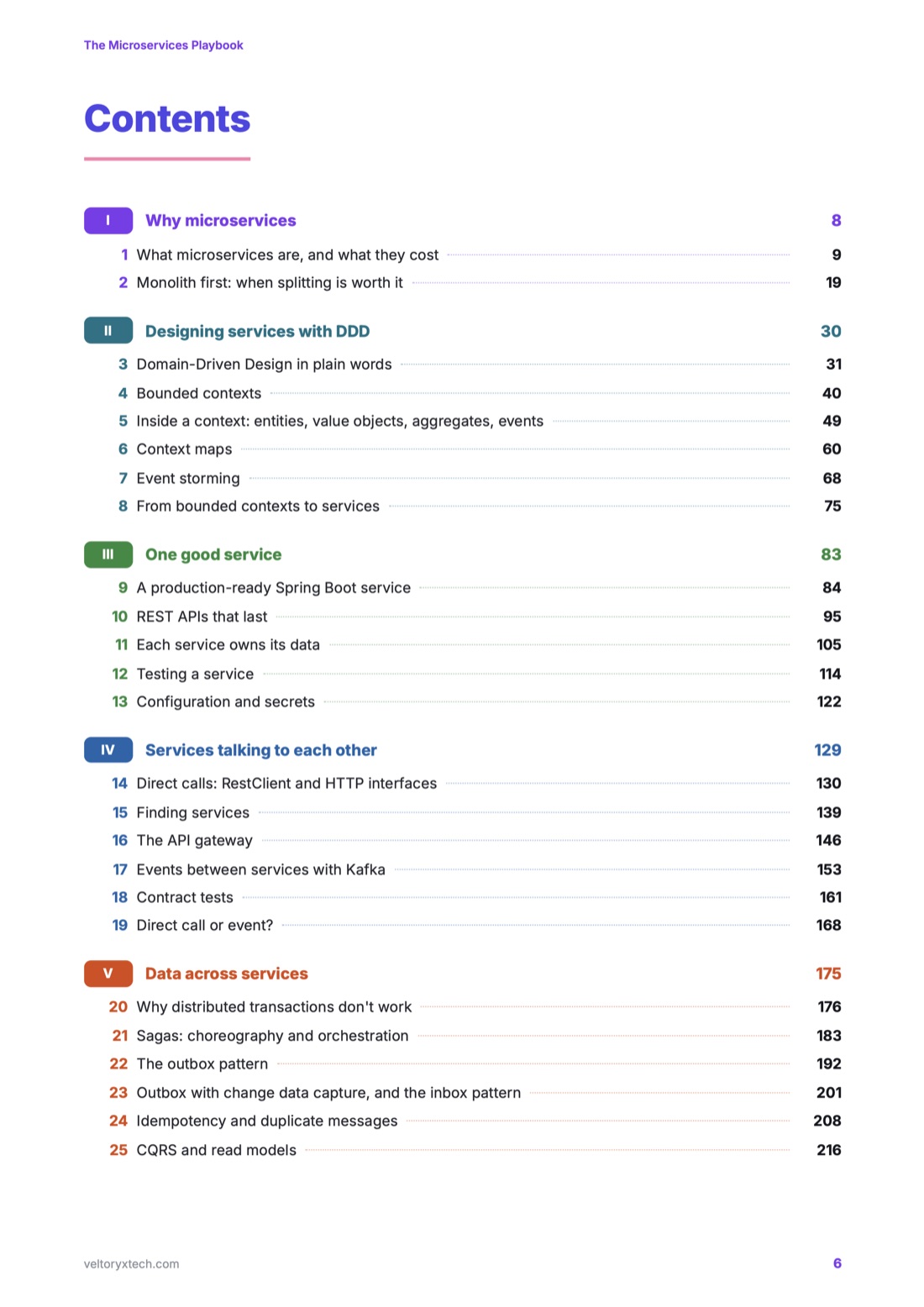
What's inside · 9 parts, 41 chapters, 5 appendices
- Why microservices: what they cost, and monolith first
- Designing services with DDD: bounded contexts, aggregates, context maps, event storming
- One good service: REST APIs, owning your data, testing, configuration and secrets
- Services talking to each other: HTTP clients, discovery, the API gateway, Kafka events, contract tests
- Data across services: sagas, the outbox pattern (two chapters), idempotency, CQRS
- When things fail: timeouts, retries, circuit breakers, fallbacks, caching
- Security: OAuth2, OpenID Connect, JWTs, client credentials and mTLS
- Seeing and running it: logs, metrics, tracing, safe deploys, containers, Kubernetes
- Real life and interviews: the strangler fig, common mistakes, three mock rounds, 120 questions
- Appendices: glossary, pattern cheat sheet, Spring quick reference, run FreshCart on your laptop, production checklist
- Every chapter starts with what interviewers ask, explains its words in plain English, and ends with common mistakes, interview questions with follow-ups and exercises
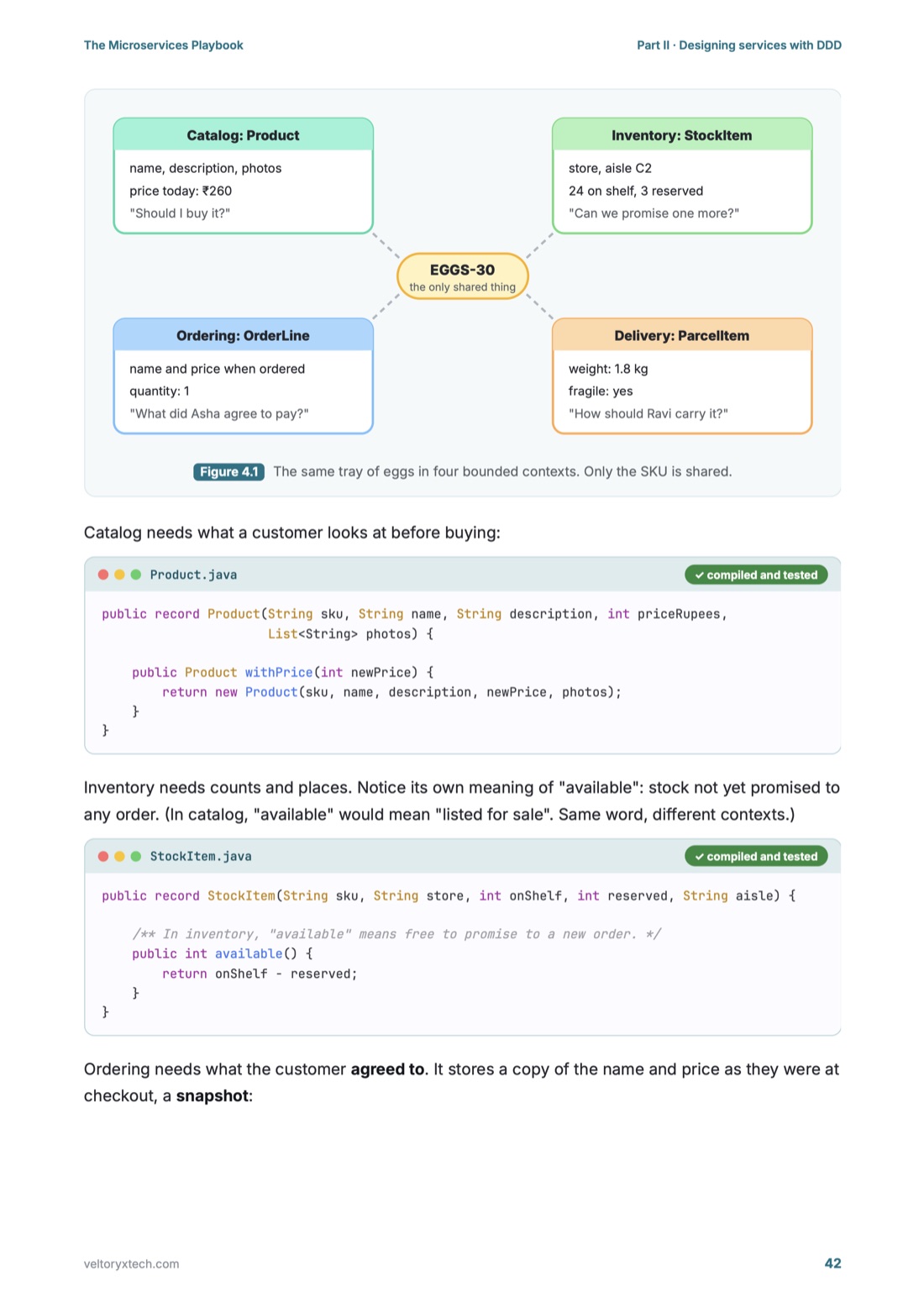
- DDD done properly: six chapters take FreshCart from one big model to bounded contexts, aggregates, a context map, an event storming session and seven services
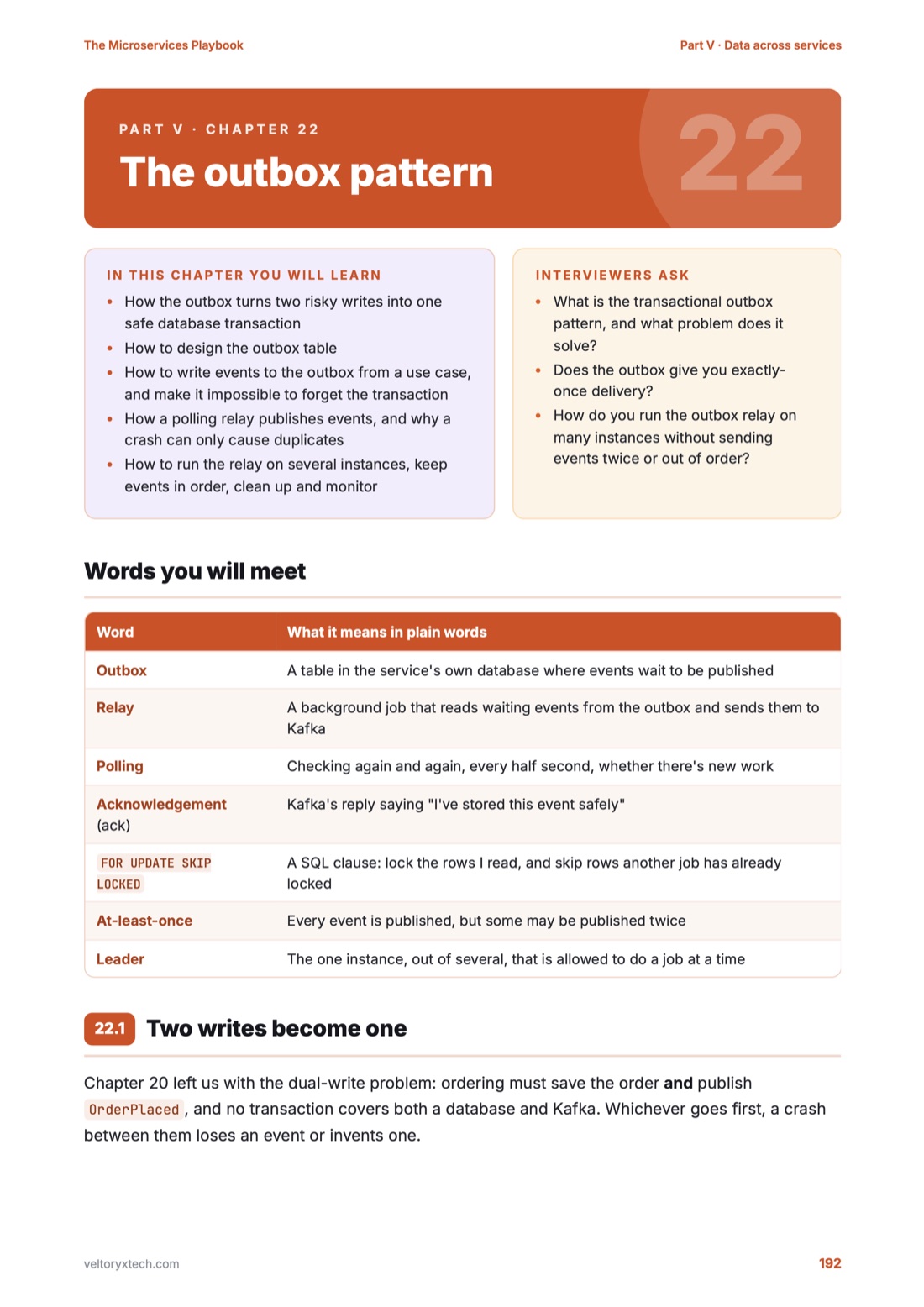
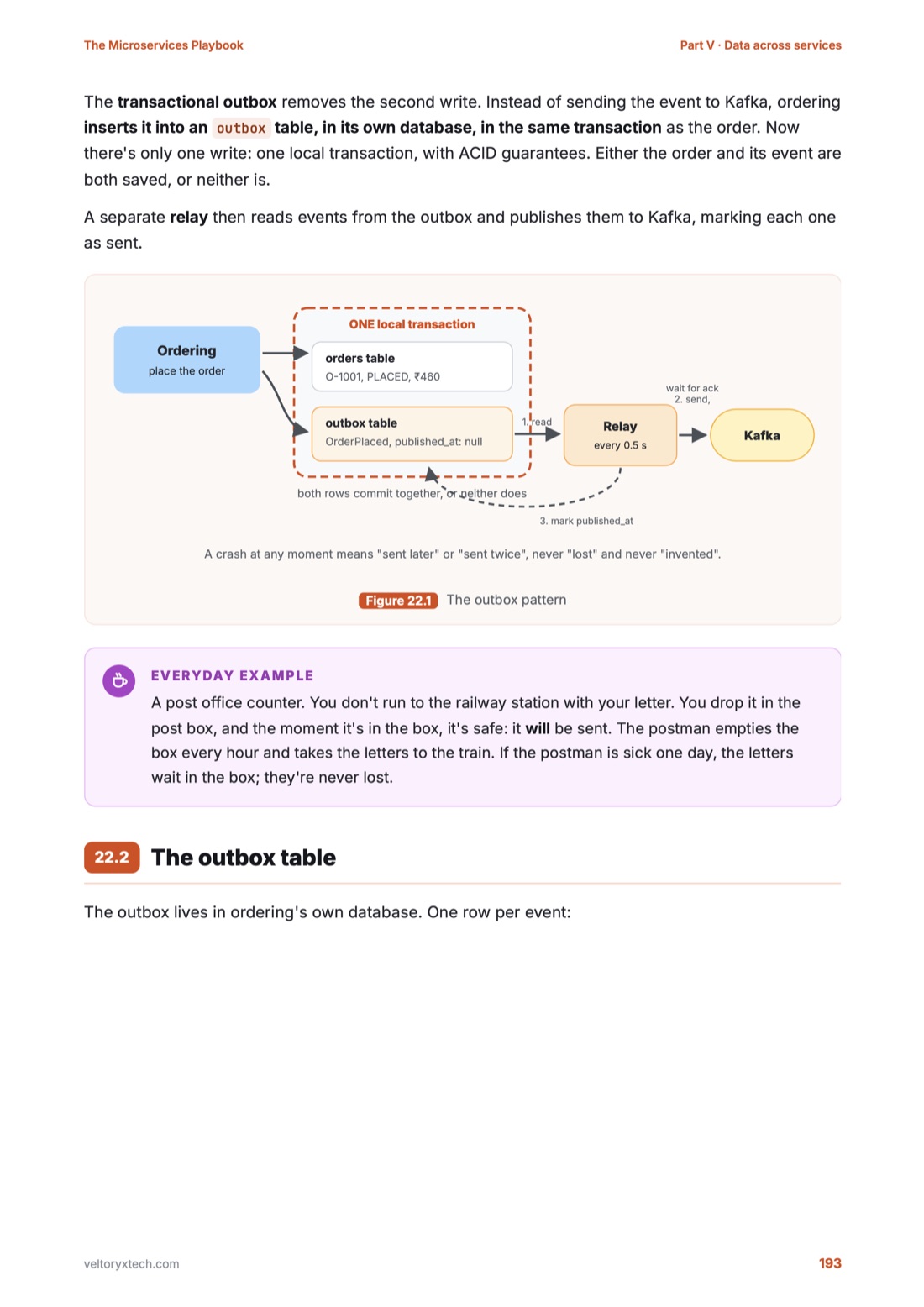
- The outbox pattern gets two chapters: a polling relay with SKIP LOCKED, then change data capture with Debezium and the inbox pattern, plus sagas, idempotency keys and CQRS
- Three mock design rounds minute by minute, 120 interview questions, a pattern cheat sheet and a production-readiness checklist
The code in chapters 1–8 was compiled and tested while the book was made, and is marked that way. From chapter 9 on, the code follows the documented Spring Boot 4.2 and Spring Cloud APIs, but the book says it wasn't run: test each listing on your versions first.
Who it's for
- Java and Spring Boot developers moving to microservices
- Engineers preparing for microservices and system design interviews
- Senior engineers splitting a monolith or designing new services
- Anyone who wants to understand sagas, the outbox pattern and resilience properly
Look inside · free sample pages
Click a page to open it larger.
This book
- The PDF of this edition, yours to keep
- Read offline, print it, write on it
- Corrected versions are free to download again
Prefer to learn online? Veltoryx Pro · ₹599/month
- The Microservices track online, with every lesson unlocked
- Every other track, quizzes and case studies
- Separate from this book: one doesn't include the other